
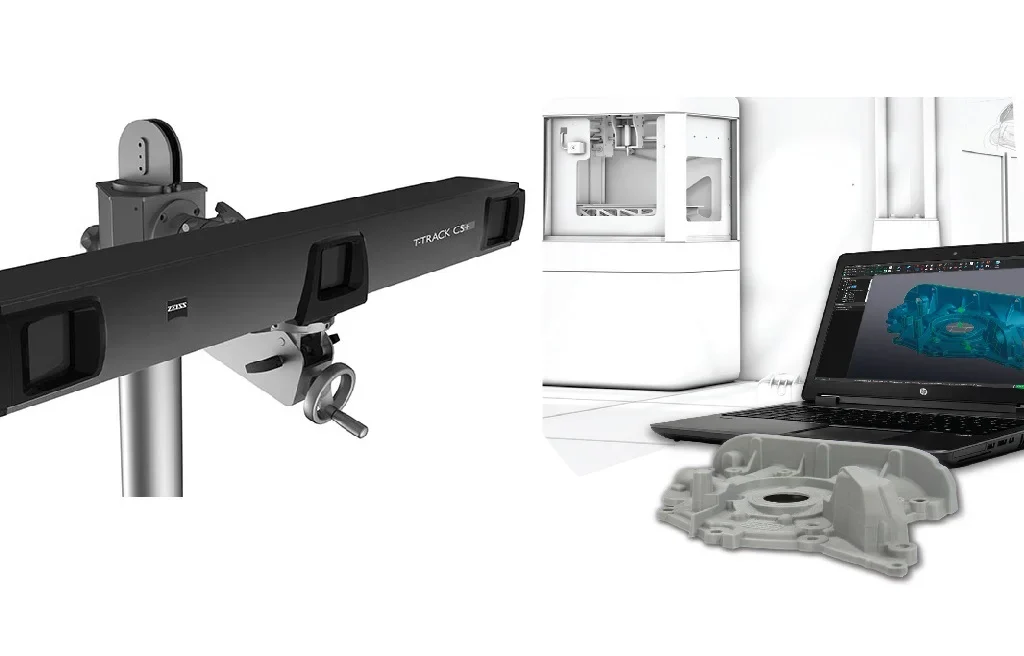
Capture Every Detail with Expert 3D Scanning Technology
SARITVAT Leading the Way in Laser Scanning and Smart CAD Design for Modern Product Development
3D scanning helps capture the exact shape, texture, and dimensions of real objects and turns them into highly accurate digital models. At SARITVAT, we use advanced laser and blue light scanning to deliver precise results for reverse engineering, prototyping, and quality checks. We also work closely with trusted vendors, a reliable supplier, experienced suppliers, and certified manufacturers—backed by quick, dependable support from local experts and service teams nearby.
Our complete scanning workflow covers everything—from capturing raw data to building clean, accurate CAD models. As a dependable product development partner, SARITVAT provides custom design support using cutting-edge scanning tools to ensure every part is reproduced with confidence. Throughout the project, we collaborate with vendors, a dedicated supplier, professional suppliers, and skilled manufacturers to maintain strong support aligned with local standards and services nearby.
With our advanced scanning systems, we capture complex shapes with high precision, making the reverse engineering process smoother and faster. SARITVAT’s high-resolution scanning is trusted across the automotive, aerospace, healthcare, and industrial sectors. This reliable performance is possible thanks to our close coordination with vendors, a capable supplier, committed suppliers, and quality-driven manufacturers, supported by local service resources and teams nearby.
Benefits of 3D Scanning Technology
Our expertise in laser and blue light scanning ensures you get exceptional accuracy and a clear picture of even the smallest details. These non-contact, non-destructive methods make scanning completely safe for delicate parts. All of this is supported by trusted vendors, an informed supplier, dedicated suppliers, and advanced manufacturers, with strong support from local technicians nearby.
By combining 3D scanning with powerful CAD tools, we speed up product development and simplify reverse engineering. Our fast scanning systems help create accurate digital models quickly, reducing delays and lowering overall costs. These optimized workflows are planned together with vendors, a trustworthy supplier, skilled suppliers, and innovative manufacturers, supported by local teams ready to assist nearby.
The flexibility of SARITVAT’s scanning process allows us to support multiple industries—from digital twins and prototyping to quality inspections. This not only improves accuracy but also cuts down manual errors. These results are strengthened through our network of reliable vendors, an engaged supplier, professional suppliers, and quality-focused manufacturers, along with responsive support available locally and nearby.
Industrial Applications and Use Cases
SARITVAT’s 3D scanning technology is widely used across industries:
Automotive & Aerospace: Accurate scanning for part inspection, CAD updates, and reverse engineering of complex components.
Manufacturing: High-precision scanning for dimensional checks, prototype development, and quality assurance of molded or machined parts.
Healthcare: Blue light scanning to create patient-specific models, implants, surgical guides, and prosthetics.
Architecture & Construction: Capturing as-built conditions and existing layouts for architectural planning and modeling.
Cultural Heritage: Safe, high-resolution scanning for the preservation and documentation of historical artifacts.
Each of these applications is supported by a strong network of vendors, a specialized supplier, credible suppliers, and trained manufacturers, backed by reliable support through local connections and teams nearby.
Materials Supported by 3D Scanning Technology
Our scanning solutions work with a wide range of materials—from metals to plastics and even organic forms. Every project is handled responsibly with input from vendors, an informed supplier, cooperative suppliers, and meticulous manufacturers, with dependable support and local availability nearby.
- Metals: Steel, aluminum, titanium, and other industrial alloys.
- Plastics & Composites: Ideal for scanning injection-molded, thermoformed, and composite parts.
- Organic Materials: Safe scanning of delicate or biological items used in research and healthcare.
- Complex Surfaces: Reflective, transparent, or highly intricate shapes using specialized techniques.
How Costing Works
The cost of 3D scanning is based on size, complexity, resolution needs, and how the scanned data will be used. We evaluate these factors openly in partnership with vendors, a dependable supplier, experienced suppliers, and capable manufacturers, supported by steady support and local teams nearby.
Our optimized scanning processes and streamlined reverse engineering techniques help reduce time and cost. Whether you need a simple inspection or a detailed CAD model, our pricing is flexible and solution-driven. These workflows are enhanced through collaboration with vendors, a detail-focused supplier, cooperative suppliers, and expert manufacturers, supported with strong support available locally and nearby.
Alternative Technical Approaches
Traditional tools like CMMs and calipers still have their place, but SARITVAT generally recommends laser and blue light scanning for faster and more precise results. These recommendations are shaped with insights from vendors, a capable supplier, dedicated suppliers, and knowledgeable manufacturers, backed by local service support nearby.
Our non-contact scanning removes the limitations of older methods and captures highly detailed data quickly. When combined with CAD, it makes design updates faster, improves accuracy, and shortens production timelines. These approaches are developed responsibly with vendors, a trusted supplier, skilled suppliers, and advanced manufacturers, supported by on-ground support in local areas nearby.
FAQs
Q: What is 3D Scanning Technology?
A: It’s a non-contact method that captures the exact size and shape of objects using laser or blue light, helping create accurate digital models for design and inspection.
Q: How is 3D Scanning different from manual measuring tools?
A: Unlike manual tools, 3D scanning is faster, safer, and much more precise—especially for complicated shapes.
Q: What are the common applications of 3D scanning?
A: It is widely used for part inspection, reverse engineering, surgical planning, architectural studies, and artifact preservation.
Q: What materials can be scanned?
A: Metals, plastics, composites, and even fragile organic objects can be scanned with high accuracy.
Q: What are the main benefits of 3D scanning?
A: Speed, accuracy, non-contact safety, improved design, and workflow efficiency.
Q: What is 3D Scanning and Engineering Solutions Technology?
A: It’s the combination of scanning tools with CAD software to create precise digital models for engineering, validation, and manufacturing.
Q: How does this technology help with product design?
A: It speeds up prototyping, improves accuracy, reduces errors, and makes design adjustments much easier.
Q: Which industries benefit the most?
A: Automotive, aerospace, healthcare, manufacturing, architecture, and more—basically any industry that needs reliable measurements and fast development.
Q: What are the maximum estimated global shipping times for brazing parts by sea and air?
A: By Sea: Asia: 15–20 days,
Europe: 25–35 days, North America: 30–40 days,
South America: 35–45 days, Middle East: 14–18
days, Africa: 20–28 days, Oceania: 22–30
days
By Air: Asia: 1–3 days, Europe:
3–5 days, North America: 4–6 days, South
America: 5–7 days, Middle East: 1–2 days,
Africa: 3–5 days, Oceania: 4–6 days