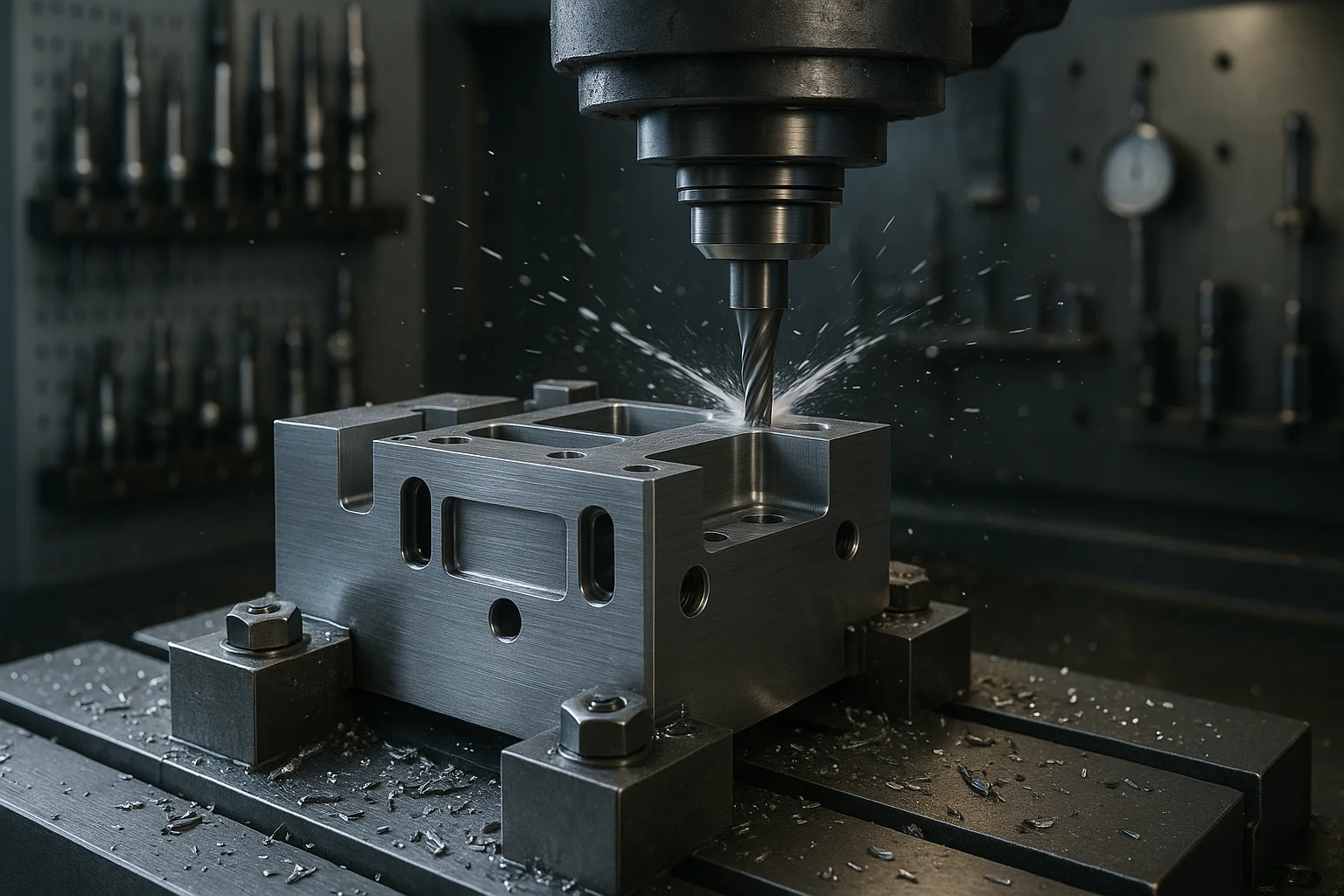
Fixture Manufacturing
SARITVAT — Your go-to partner for workholding, alignment, and quality assurance across industries.
Fixture manufacturing is all about creating specialized tools that securely hold, support, and position a workpiece during machining, welding, assembly, or inspection. Think of a fixture as a custom work-holding buddy—it keeps your part steady so you can get accurate, repeatable results. Unlike jigs, which guide tools, fixtures focus on holding the part stable and making setups quick and consistent. At SARITVAT, we coordinate with Vendors, Suppliers, and experienced Manufacturers with responsive Support close to you, so every choice feels practical, ethical, and genuinely helpful.
We engineer fixtures that boost accuracy, save setup time, and make automation reliable. Our team blends CAD/CAM, simulations, and shop-floor know-how to deliver ergonomic, safe, and easy-to-maintain tooling for anything from single prototypes to high-volume production. With Vendors, Suppliers, and Manufacturers aligned, and Support locally available, you get transparent, risk-aware, and customer-friendly solutions.
Benefits of Technology
• Better accuracy and repeatability thanks to smart clamping and location strategies, co-designed with Vendors and Manufacturers with safety in mind.
• Faster production with shorter setups and smooth changeovers, backed by on-call Support from local teams who understand real shop-floor pressures.
• Safer operations—parts stay steady under machining, welding, or assembly loads, reassuring Suppliers and your main Supplier that worker safety comes first.
• Designed for automation—compatible with CNC machines, robots, and quick-change systems, with nearby testing before scale-up.
• Consistent quality control with clear operator access and datum-driven designs, while Support manages Suppliers and local calibration for reliable audits.
Industrial Application and Use Cases
Automotive — Engine block and body panel holding, welding nests, and in-process gauges, supported by local Suppliers and nearby Manufacturers.
Aerospace — Precision alignment tools and assembly fixtures for flight-critical parts, coordinated among Vendors, your Supplier, and certified Manufacturers.
Medical — Cleanroom-friendly fixtures for device assembly and testing, with Support from local quality teams and compliant Suppliers.
Electronics — PCB assembly, test, and alignment fixtures, with nearby Vendors and responsive Supplier support.
General Manufacturing — Modular, reconfigurable fixtures for high-mix, low-volume lines, co-created with Manufacturers and aligned Suppliers with field Support.
Material Used in Technology
Tool Steels — Durable and rigid for clamping or datum features, validated by Vendors and Manufacturers for long life.
Aluminum — Lightweight for easy handling or robotics, with Support from Suppliers to keep ergonomics friendly.
Cast Iron — Base plates with vibration damping for stable machining, ideal for nearby setups by your Supplier.
Engineered Polymers & Composites — For light-duty or prototype use, allowing nearby pilot trials with your Supplier.
How Costing Works
Costs depend on fixture complexity, tolerances, materials, actuation, and verification. Early design for manufacturability, standard components, and simulation help cut rework and lead time. SARITVAT provides transparent estimates covering design, machining, finishing, assembly, and prove-out, so you can make informed decisions with confidence and ethical clarity.
Alternative Technical Suggestions
Modular Fixturing — Reconfigurable bases and locators for high-mix parts, avoiding sunk-cost lock-ins.
Adaptive/Smart Fixtures — Sensorized clamping for real-time feedback and data-driven decisions.
Additive-Enabled Tooling — 3D-printed elements for lightweight or complex designs, balancing cost and access.
Standard Workholding — Vises, chucks, and vacuum plates for pilot builds or flexible tooling use.
FAQs
Q: What is fixture manufacturing?
A: Designing and making custom work-holding devices that secure a part for accurate and repeatable operations.
Q: How does a fixture differ from a jig?
A: A jig guides the tool; a fixture mainly holds the part steady so work can be done safely and precisely.
Q: Which materials are commonly used?
A: Tool steel, aluminum, cast iron, and engineered polymers, chosen through open trade-off discussions.
Q: Can fixtures support automation?
A: Yes, they integrate with robots, CNC, and quick-change systems for faster, consistent production.
Q: How are fixtures validated?
A: Using CMM checks, trial runs, and adjustments until goals are met with clear sign-off criteria.
Q: Which industries benefit most?
A: Automotive, aerospace, medical devices, electronics, and general manufacturing rely on fixtures for quality, speed, and safety.
Q: What affects project timelines and cost?
A: Part geometry, tolerances, volume, materials, actuation, and verification—reviewed collaboratively for informed decisions.
Q: Advantages over general-purpose workholding?
A: Purpose-built fixtures minimize setups, control datums, and deliver repeatability that generic clamps can't match.
Q: What safety practices apply?
A: Use PPE, verify clamping, design safe access, avoid pinch points, and train operators while modeling ethical practices.
Q: Maximum estimated shipping times from the factory to global regions for Brazing parts via sea and air?A: By Sea: Asia: 15–20 days, Europe: 25–35 days, North America: 30–40 days, South America: 35–45 days, Middle East: 14–18 days, Africa: 20–28 days, Oceania: 22–30 days
By Air: Asia: 1–3 days, Europe: 3–5 days, North America: 4–6 days, South America: 5–7 days, Middle East: 1–2 days, Africa: 3–5 days, Oceania: 4–6 days