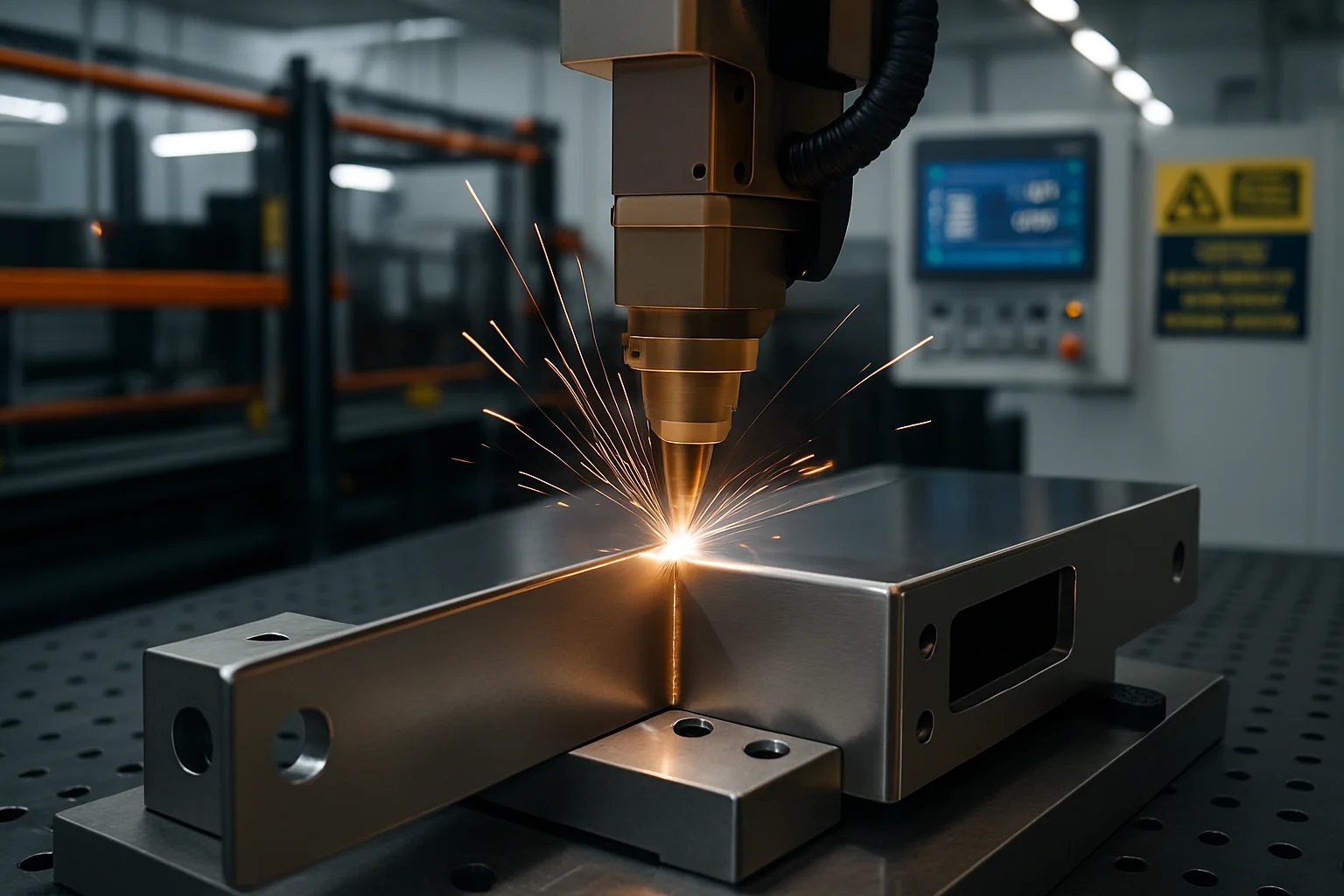
Laser Welding Manufacturing Process
SARITVAT – Precision Laser Welding Made Simple and Reliable
Laser welding is all about joining materials with pinpoint accuracy using a focused laser beam. At SARITVAT, we make sure the process is smooth, safe, and understandable. We explain options in plain language, document decisions clearly, and keep your team informed from concept to production, so everyone feels confident.
Our advanced laser systems, paired with thoughtful project management, help coordinate drawings, trials, and approvals transparently. When questions pop up, our dedicated team clarifies options, shares data, and helps balance quality, cost, and timelines, with support always available for local plants or nearby partner sites.
Benefits of SARITVAT Laser Welding Services
Deep-penetration welding creates strong, clean stainless steel joints; validated processes and checklists give teams confidence without last-minute surprises.
Non-contact, high-speed welding keeps heat and distortion low, protecting surfaces and reducing post-processing. This steadiness makes schedules easier for everyone involved.
Precision laser control handles micro-features and thin materials, with clear guidance on risks and mitigations, plus gentle coaching during production.
We weld a variety of metals—stainless steel, aluminum, titanium, and certain dissimilar pairs—with practical fixtures, easy maintenance, and approachable documentation for local and nearby sites.
Battery welding is done with safety and repeatability in mind. Recipes are locked, changes recorded, and our team is reachable to resolve issues quickly and calmly.
Industrial Applications of Laser Welding
Automotive Industry: Gear housings, battery tabs, and sensor brackets welded with controlled heat and audit-ready documentation.
Aerospace Components: Lightweight structures and precision hardware joined with consistent beam delivery; clear traveler packs make approvals easy.
Electronics Sector: Battery tabs, connectors, and microcircuits welded with traceability; spare parts and guidance are available for local teams.
Medical Devices: Fine welds on instruments and housings with clear risk and cleanliness notes, and easy-to-verify documentation.
Energy & Power Systems: Fuel-cell plates and solar hardware welded for durability, with preventive care scheduled and responsive support for quick fixes.
Tool & Die Industry: Precision repair and build-up using CNC laser; simple fixtures and feedback loops help improve the next run effortlessly.
Materials & Technologies We Use
Stainless Steel & Aluminum: Deep-penetration welds for strong assemblies with consistent visual quality.
Dissimilar Metals: Copper-to-aluminum and nickel-to-steel joints with stable optics and simple change control.
Battery Welding: Tab-to-cell connections with disciplined parameters; readiness kits and on-call support keep lines steady.
Fiber Laser Systems: Efficient for reflective alloys; uptime is tracked openly so teams can plan confidently.
CNC Automation: Accurate beam placement with verified offsets and traceable logs.
Shielding Gases: Argon and helium reduce oxidation, with practical notes that help operators make smart choices.
Costing Approach
Pricing depends on material, weld depth, length, and geometry. Quotes clearly separate essentials from options, making it easy for teams to choose based on budget and needs, whether for small local orders or larger rollouts.
Volume, automation, and integration with other steps affect total cost. We show side-by-side scenarios so teams can understand the impact of decisions without hidden surprises.
Assist gas usage, beam settings, and CNC parameters are tuned for value; we keep measurements transparent and provide support to help non-specialists make confident choices.
Technological Innovations
AI-Driven Welding: Sensors adjust focus and power in real time to keep seams consistent; reports are simple and useful.
Hybrid Fabrication Lines: Welding alongside machining or additive stations on shared pallets, reviewed collaboratively to shorten feedback loops.
High-Speed Battery Tab Welding: Rapid, stable joints with mirrored data and dedicated support during ramp-up.
Adaptive Beam Shaping: Variable profiles match joint geometry; fixture notes are easy to read and follow.
Automated Laser Cells: Robotic loading ensures steady throughput; spares, checklists, and support are ready for local teams.
Enhanced Monitoring: Vision and thermal checks catch drift early; alerts are actionable and easy to close.
FAQs
Q: How does SARITVAT ensure ethical practices?
A: We keep processes transparent, share clear records, and coordinate with vendors, engineers, and manufacturers to make sure outcomes feel fair and responsible.
Q: Can you handle urgent orders?
A: Yes; we schedule realistically, communicate risks early, and provide support so local and nearby teams can move efficiently and safely.
Q: Do you work with client-selected part sources?
A: Absolutely. We align drawings, materials, and milestones with your chosen suppliers, document agreements, and maintain stable scope.
Q: Is your process suitable for aerospace-grade stainless steel?
A: Yes; CNC control, shielding, and validation ensure consistent welds, with easy-to-audit compliance evidence.
Q: How do you maintain quality at higher volumes?
A: Fixtures, AI monitoring, and open communication keep quality steady. Metrics are shared and countermeasures logged to spread learning.
Q: Can you weld dissimilar metals?
A: Yes; copper-aluminum and nickel-steel joints are possible, with simple recipes for your suppliers to follow.
Q: Do you provide battery welding for EV components?
A: We deliver disciplined tab welding with traceability; spare kits and support are ready for local and nearby lines.
Q: How is pricing determined?
A: Costs depend on material, depth, length, and volume; quotes are clear, showing choices so teams can decide without pressure.
Q: Can you work alongside client-approved contractors?
A: Yes; we integrate with your selected vendors, maintain a single accountable contact, and avoid duplicate efforts.
Q: Which industries benefit most?
A: Automotive, aerospace, electronics, energy, medical, and tooling programs rely on our steady outcomes, documentation, and approachable support for local and nearby teams.
Q: What are the maximum estimated shipping times from the factory to global regions for Brazing parts via sea and air?A: By Sea: Asia: 15–20 days, Europe: 25–35 days, North America: 30–40 days, South America: 35–45 days, Middle East: 14–18 days, Africa: 20–28 days, Oceania: 22–30 days
By Air: Asia: 1–3 days, Europe: 3–5 days, North America: 4–6 days, South America: 5–7 days, Middle East: 1–2 days, Africa: 3–5 days, Oceania: 4–6 days