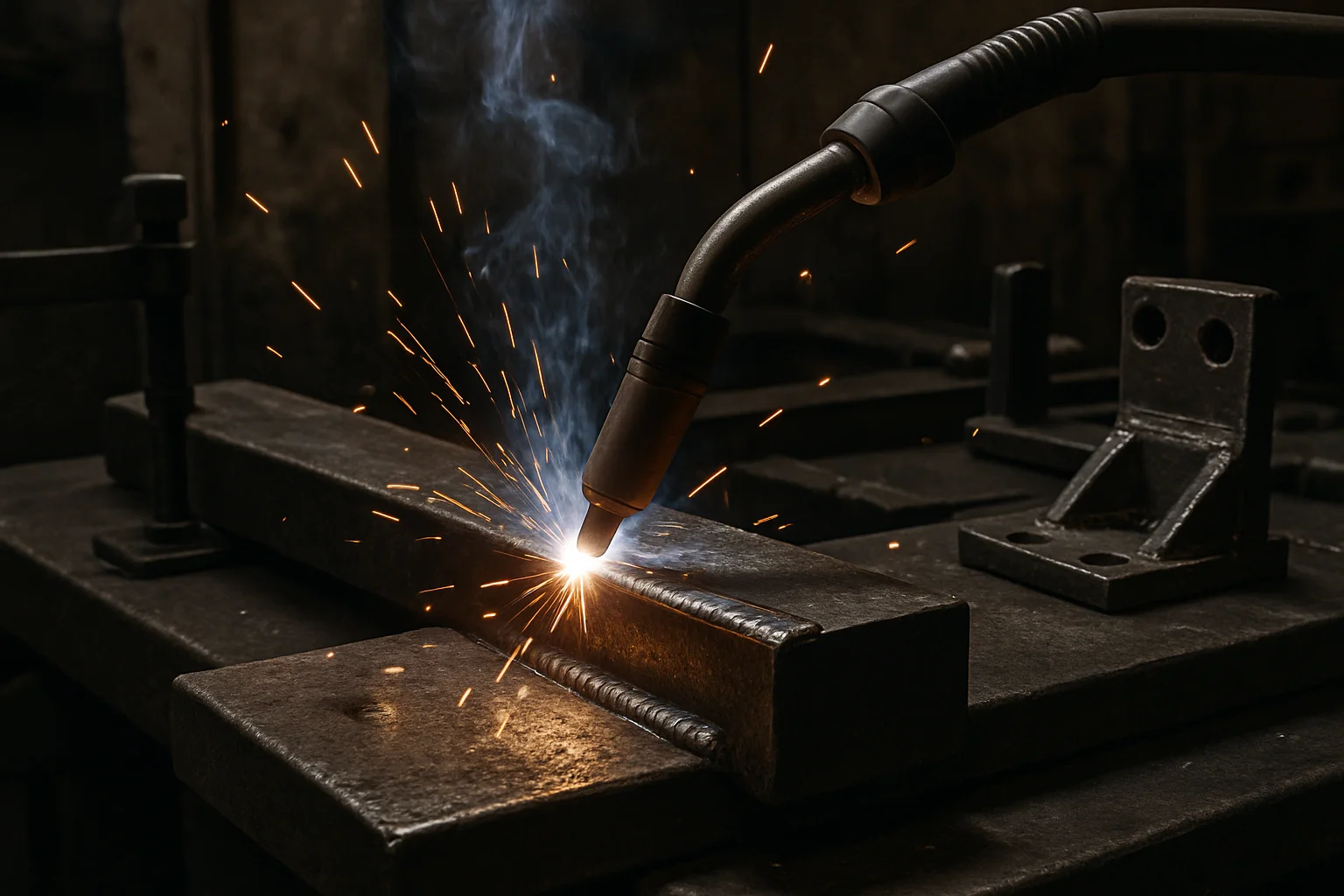
MIG Welding
SARITVAT: Precision MIG Welding & Robotic Fabrication for Your Projects
MIG welding is a fast, reliable process used across industries like automotive, aerospace, metal fabrication, and construction. At SARITVAT, we work closely with local manufacturers, suppliers, and vendors to deliver precision MIG welding services—combining human expertise with robotic systems for consistent quality. Our solutions are designed to help nearby and local industries get results they can count on.
The process uses a consumable wire electrode along with shielding gas to create strong, consistent welds. It’s fast, adaptable, and trusted by vendors and suppliers everywhere. Our team understands the ins and outs of MIG welding, ensuring that local manufacturers and nearby suppliers get the perfect fit for projects involving sheet metal, aluminum, or other alloys.
Beyond welding, we integrate laser cutting, spot welding, and automated fabrication into seamless solutions. Whether it’s small-batch production for a nearby supplier or large-scale robotic MIG welding for a local vendor, we provide full-cycle support while keeping quality and deadlines on track.
Today, manufacturers need partners who can adapt quickly. Our welding services are flexible, dependable, and scalable, backed by skilled operators, robotic integration, and practical decision-making—all aimed at helping suppliers and vendors achieve long-term value and reliable results.
Benefits of Technology
Fast, high-quality MIG welding—perfect for mass production and metal fabrication
Strong, deep-penetration welds for high-load applications
Adaptable to lightweight materials like aluminum and sheet metal
Robotic MIG welding ensures repeatable, precise welds
Laser cutting integration reduces post-processing for cleaner edges
Minimal heat distortion keeps sensitive materials safe
Supports manual welding for suppliers with smaller projects
Reliable across different welding setups and industries
Certified welding experts guide local suppliers and global vendors
Industrial Applications & Use Cases
Automotive: Fabricating chassis, exhaust systems, and structural components
Construction: Assembling reinforcement beams and structural elements
Railways: Aluminum welding for lightweight bogies and components
Aerospace: Welding airframe panels with precision and high performance
Electrical Panels: Sheet metal enclosures made using laser cutting and MIG welding
Heavy Machinery: Load-bearing welds supported by experienced manufacturers
Consumer Goods: Spot welding for strong and clean frame assemblies
Defense: High-strength component production with safety-backed supplier support
Materials Used
Mild Steel: Easy to weld and compatible with manual setups
Stainless Steel: Durable, corrosion-resistant, perfect for nearby manufacturers
Aluminum: Lightweight, with minimal distortion for advanced projects
Galvanized Steel: Common in high-volume sheet metal fabrication
Alloyed Steels: Strong and compatible with robotic MIG welding systems
Structural Plates: CNC laser-cut for precise pre-welding preparation
How Costing Works
We believe in transparent, fair pricing tailored to suppliers and vendors. Costs are influenced by:
Material Type: Aluminum, mild steel, or specialized alloys affect cost
Design Complexity: Intricate assemblies may need more time and support
Production Volume: Bulk orders can lower per-unit pricing
Process Integration: Combining laser cutting, welding, and spot welding may impact overall costs
Quality Requirements: Tight tolerances or special finishes are factored in
We keep suppliers and vendors informed throughout, ensuring quotes match project scope and timelines.
Alternative Technical Options
TIG Welding: For precise, aesthetically sensitive welds
Stick Welding: Rugged option for structural metal fabrication
Laser Welding: Micron-level accuracy for high-precision projects
Resistance Spot Welding: Quick sheet metal joining for local vendors
Brazing or Soldering: Heat-sensitive material solutions
Robotic Welding: Automated MIG welding for high-volume, consistent output
Friction Stir Welding: Specialized aluminum applications with vendor support
FAQs
Q: What is MIG welding?
A:
MIG welding joins metals using a wire electrode
and shielding gas. It’s fast, reliable, and
widely used by vendors and suppliers for sheet
metal, aluminum, and fabrication projects.
Q: Why trust SARITVAT?
A: We
combine skilled manual welding with automated
robotic MIG welding to provide unmatched support
for local manufacturers and vendors.
Q: Which materials are
compatible?
A: Aluminum,
stainless steel, and mild steel are our most
common MIG welding materials.
Q: Is MIG welding suitable for
automation?
A: Yes, our robotic
MIG welding systems help vendors scale
efficiently.
Q: How does laser cutting
help?
A: Clean edges from laser
cutting improve weld quality and reduce rework.
Q: Difference between machining and
manufacturing?
A: Machining is
the welding process; manufacturing includes
assembly and integration with supply chain
support.
Q: Common welding joints?
A:
Lap, butt, corner, and T-joints are all
supported for precise assembly.
Q: What’s unique about aluminum
welding?
A: Requires careful
control of shielding gas and heat, which we
handle with precision.
Q: How fast is delivery?
A:
Simple jobs can take a few days; complex
assemblies take longer, with ongoing support.
Q: What safety standards are
followed?
A: Full PPE, fume
handling, and monitored robotic welding ensure
safe operations for all suppliers and vendors.
Q: Maximum shipping times for Brazing
parts?
A: By
Sea: Asia: 15–20 days, Europe:
25–35 days, North America: 30–40 days, South
America: 35–45 days, Middle East: 14–18 days,
Africa: 20–28 days, Oceania: 22–30 days
By Air: Asia: 1–3 days, Europe:
3–5 days, North America: 4–6 days, South
America: 5–7 days, Middle East: 1–2 days,
Africa: 3–5 days, Oceania: 4–6 days