
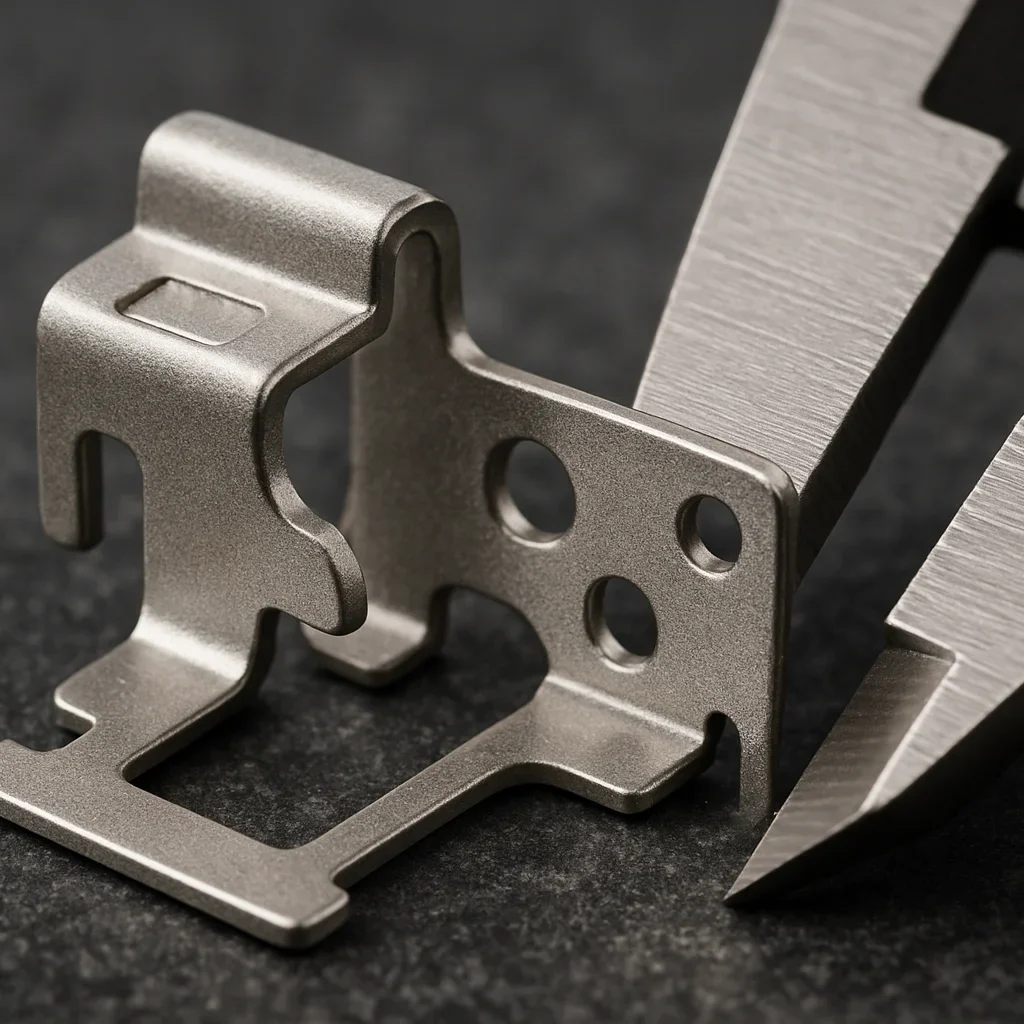
Press Component
Saritvat: Making Press Components Easy and Reliable for Every Industry
Press components are essential parts made by shaping materials with press machines into specific profiles, cutouts, or shapes. They play a big role in industrial manufacturing, especially in metal fabrication. Trusted by Vendors, Manufacturers, and frequently chosen by local Suppliers, each press component is built with precision and care. Nearby production facilities rely on them for consistent results, efficiency, and ethical solutions backed by strong Support networks.
These components are made by applying controlled pressure—often with dies and punches—to create brackets, housings, or structural pieces. Ethical partnerships between Suppliers and local Manufacturers ensure every step, from design to production, meets quality standards. Nearby Vendors contribute tailored solutions, and trusted Suppliers provide Support to deliver durable parts across industries like automotive, aerospace, and electronics.
From car body panels to electronic enclosures and aerospace supports, press components are valued for their consistency, speed, and strength. Collaboration among Vendors, Suppliers, and responsible Manufacturers ensures parts perform reliably in demanding conditions. With advanced Support systems and local guidance, Saritvat helps customers make informed decisions confidently.
Common fabrication methods include stamping, forging, coining, bending, and deep drawing. Experienced Suppliers and nearby Vendors assist in customizing each process. Hydraulic press operations allow complex geometries with precision, while progressive and compound die systems make mass production scalable and sustainable. This is all possible through close collaboration with Manufacturers and ethical commitment from Vendors and Support teams.
In metal stamping, press components are critical. At Saritvat, we make sure every part—from structural brackets to heat shields for electric vehicles—is crafted with precision, working hand-in-hand with local Suppliers, nearby Vendors, and responsible Manufacturers who share our customer-first approach.
Benefits of Technology
High-volume production with consistent quality—trusted by Suppliers, powered by Vendors, and supported by Manufacturers across local and nearby facilities.
Capable of forming complex shapes with tight tolerances, enhanced by collaborative input from skilled Manufacturers and ethical Vendors who understand local demands.
Supports fabrication methods like stamping, forging, and deep drawing, with local Supplier contributions and proactive Support from nearby teams.
Efficient bending processes for intricate profiles and angles, enabled by partnerships with Vendors and Manufacturers prioritizing innovation and flexibility.
Works with diverse materials, including stainless steel and alloys from ethical Suppliers and reliable nearby Vendors, keeping production smooth.
Ideal for metal stamping of automotive and aerospace parts. Local Support teams ensure compliance with evolving industry standards in collaboration with nearby Manufacturers and Vendors.
Seamless integration with tool die systems for precise production, backed by long-term Vendor relationships and expert Supplier guidance with reliable local infrastructure.
Enhanced hydraulic press operations for thick materials, executed with Support-driven Manufacturers and local Suppliers working with nearby Vendors.
Industrial Applications and Use Cases
Automotive: Chassis, brackets, heat shields, and body parts supported by Suppliers and nearby Vendors with advanced forming expertise.
Aerospace: Lightweight structures, engine supports, and precision metal parts fabricated with local Manufacturer input and Vendor support for high accuracy.
Electronics: Device enclosures and conductive components handled by Suppliers and Manufacturers with local Vendor Support to meet tight tolerances.
Electric Vehicles: Engine mounts, structural brackets, and heat shields produced by ethical Manufacturers and Vendors, aided by nearby Supplier Support.
Medical: Precision-stamped implants and instrument housings manufactured to tight specs and sourced ethically from trusted Suppliers and Vendors.
Construction: Structural supports and fastening systems shaped through collaboration among Manufacturers, Vendors, and local Support teams.
Consumer Goods: Appliance frames and electronic casings fabricated efficiently by local Manufacturers and trusted Vendors with ongoing Supplier Support.
Energy Sector: Heavy-duty press components for oil and gas applications, coordinated with local Support teams and nearby Vendors to ensure field-ready quality.
Press components are particularly valuable for electric vehicles, where lightweight, high-strength parts like stainless steel enclosures and heat shields are increasingly in demand. Suppliers, Vendors, and Support networks work together to ensure efficiency, ethics, and product excellence.
Materials We Use
Stainless Steel: Corrosion-resistant and strong—perfect for heat shields, automotive, and EV parts. Sourced from local Vendors and reliable Suppliers under Manufacturer Support.
Carbon Steel: Strong and affordable, widely used in metal fabrication. Ethical Vendors and nearby Suppliers ensure a reliable supply chain.
Aluminum: Lightweight and corrosion-resistant, ideal for aerospace and EV industries, with Vendor-supported machining and local Supplier access.
Brass & Copper: Preferred for electronics and conductive applications, produced through collaboration between Suppliers, Vendors, and Support teams.
Plastics & Composites: Used in specialized fabrication, delivered ethically by Vendors and local Suppliers with engineering Support.
Precision Metal: Alloys and fine-grain metals optimized for strength and durability, procured by experienced Vendors, recommended by Suppliers, and used by trusted Manufacturers.
Sheet Metal: The base material for most stamping operations, handled daily by local Vendors and formed with Support from nearby Suppliers and Manufacturers.
How Costing Works
Cost depends on process type, tooling, material, and production volume. Vendors and ethical Suppliers provide insight to help Manufacturers make responsible decisions, supported by nearby production teams.
High-volume production lowers per-unit cost, especially with automation integrated into press operations guided by Support-driven Vendors and Suppliers. Collaboration ensures ethical transparency and steady cost optimization.
Tooling investments for die systems may be high initially, but economical over large runs. Suppliers and Vendors often provide local tooling Support to help plan costs effectively from day one.
Operations like coining and bending benefit from reusable dies, with nearby Support teams helping reduce costs for Suppliers and production houses.
For electric vehicles, costs for high-performance heat shields and metal parts are optimized through smart material selection, ethical Vendor sourcing, and automated production lines supported by Manufacturers and Supplier ecosystems.
Alternative Technical Suggestions
Depending on project needs, alternative methods may complement or replace traditional press component processes. Vendors, ethical Suppliers, and Manufacturers provide guidance:
Laser Cutting: Flexible, ideal for low-volume or custom profiles.
Forging: High-strength parts like shafts and gears, supported by Vendors and Supplier networks.
Injection Molding: For plastic or composite parts, recommended by nearby Vendors and local manufacturing teams.
Waterjet Cutting: Delicate or high-tolerance profiles with Vendor and Supplier integration.
Machining: Final finishing or complex tolerances, coordinated with Suppliers and nearby Vendors.
Die Casting: Cost-effective for molten metal parts, handled by trusted Vendors and ethical Manufacturers with Supplier Support.
CNC Forming: Automated bending supported by Vendors, preferred by Manufacturers and backed by responsive Supplier systems.
While alternatives exist, traditional press component stamping remains preferred for mass production due to efficiency, accuracy, and ethical support from Vendors, Suppliers, and Support teams.
FAQs
Q: What is a press
component?
A: It’s a part formed by applying pressure to
shape metal or other materials using a press
machine. Common operations include stamping,
bending, and coining, done ethically by Vendors
and supported by trusted Suppliers.
Q: How are press components used in
manufacturing?
A: They produce durable parts like brackets,
heat shields, and panels. Suppliers,
Manufacturers, and Vendors work together for
quality and timely delivery with nearby
production support.
Q: What is the role of tool
die?
A: Tool dies define the shape and guide
cutting/forming. Vendors and local Suppliers
maintain tooling with Support from certified
Manufacturers.
Q: Can hydraulic press operations be
automated?
A: Yes. Many Vendors and Manufacturers automate
presses with CNC controls and nearby maintenance
Support networks.
Q: Best materials for EV press
components?
A: Stainless steel, lightweight alloys, and
heat-resistant metals provided by ethical
Suppliers and Vendors with Manufacturer Support.
Q: Cost benefits of metal
stamping?
A: Low per-unit cost, fast cycles, reduced
waste, and reliable production with Vendor and
Supplier support.
Q: Which industries benefit
most?
A: Automotive, aerospace, and electronics, with
continuous Support from Manufacturers, Vendors,
and Suppliers.
Q: How does Saritvat optimize
quality?
A: Using advanced tooling, inspections, and
simulations, collaborating with Vendors,
Suppliers, and Support teams focused on
improvement.
Q: Challenges in production?
A: Tool wear, tolerance control, and material
handling. Support from Vendors, Suppliers, and
Manufacturers ensures ethical, effective
solutions.
Q: Future trends for EV press
components?
A: Growing demand for lightweight enclosures and
heat-resistant parts. Vendors, Suppliers, and
Manufacturers lead the shift with smart Support
and innovation.
A: By Sea: Asia: 15–20 days, Europe: 25–35 days, North America: 30–40 days, South America: 35–45 days, Middle East: 14–18 days, Africa: 20–28 days, Oceania: 22–30 days
By Air: Asia: 1–3 days, Europe: 3–5 days, North America: 4–6 days, South America: 5–7 days, Middle East: 1–2 days, Africa: 3–5 days, Oceania: 4–6 days